
Beyond the Back Wall
Keys to Success in a Kitchen Addition Project
For many homeowners in established Twin Cities neighborhoods, the dream of a professional-grade kitchen eventually collides with the reality of a 1950s or 60s floor plan. When a simple cabinet swap won’t solve the problem, a strategic kitchen addition project becomes the key to unlocking your home’s potential. Expanding your footprint allows us to reimagine the kitchen not just as a room, but as a lifestyle destination.
Here are the critical decision points we navigate when integrating a new kitchen into a larger home addition.
The Galley Evolution: Preserve or Pivot?
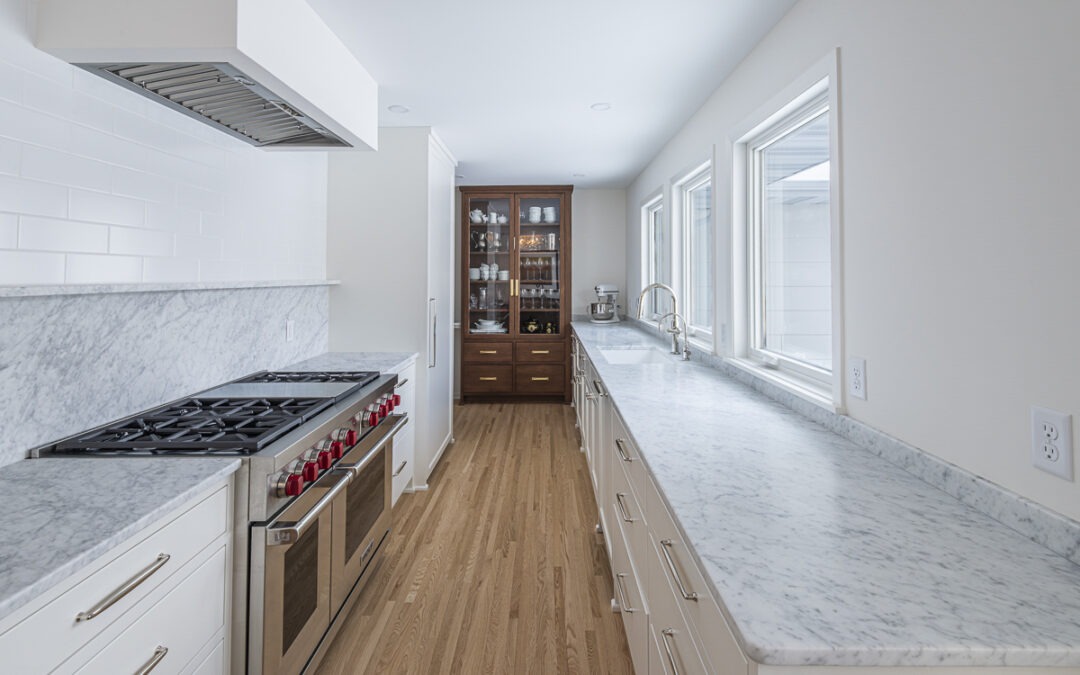
Older homes often feature the traditional galley kitchen—a layout prized by professional chefs for its efficiency but criticized by families for its narrow flow. When we plan an addition, we help you decide:
- The Refined Galley: If you love the “step-and-turn” efficiency of a galley, we can use an addition to extend its length, adding massive walk-in pantries or dedicated coffee stations at the ends while maintaining the professional workflow.
- The Pivot to Open-Concept: More often, an addition allows us to “break the galley.” By removing structural walls and extending the back of the home, we can transform a narrow corridor into a wide-open L-shaped kitchen that flows seamlessly into a new family room or dining area.
The Island: Anchor of the Kitchen Addition Project
In an older home, adding an island often feels like a compromise that chokes traffic. In an addition, the island becomes the anchor of the project.
- Expanding Possibilities: Extra square footage allows for a social island—one that is large enough to house a prep sink and seating for four without interfering with the cooking zone.
- Custom Millwork Integration: Taking advantage of our in-house millwork shop, we design these islands as furniture-grade centerpieces. We often incorporate specialized storage like vertical tray dividers or heavy-duty mixer lifts that standard cabinetry simply can’t accommodate.
Integrating the Open Plan Concept
The biggest challenge in a kitchen addition is making the new space feel like it has always been there. Seamlessly integrating the new with the existing is a point of pride for our design and construction teams.
- Structural Flow: We often use flush-mount beams to create a seamless ceiling transition between the original house and the new addition, ensuring the open-plan feels intentional rather than tacked on.
- Material Continuity: Our shop crafts custom moldings, casings, and baseboards to match your home’s original character perfectly, bridging the gap between old-school charm and modern utility.
Lighting and Natural Growth
An addition provides a rare opportunity to redefine how light enters your home.
- Natural Light: By expanding the perimeter, we can install oversized windows or even a sun-drenched breakfast nook that brings the outdoors in—something rarely possible in a land-locked original kitchen.
- Layered Task Lighting: We design your electrical plan alongside your cabinetry, integrating under-cabinet LEDs and statement pendants to ensure your custom-milled surfaces are illuminated for both prep work and evening ambiance.
Why the Design-Build Approach Matters
A project of this scale—moving walls, engineering additions, and crafting custom millwork—requires a unified team. By handling both the structural addition and the artisan interior details, we ensure that your new kitchen isn’t just a bigger room, but a more intelligent home.
Contact Us Today
Ready to start your transformation? Our team is ready to hear your ideas and discuss how our in-house craftsmen can bring your vision to life.